
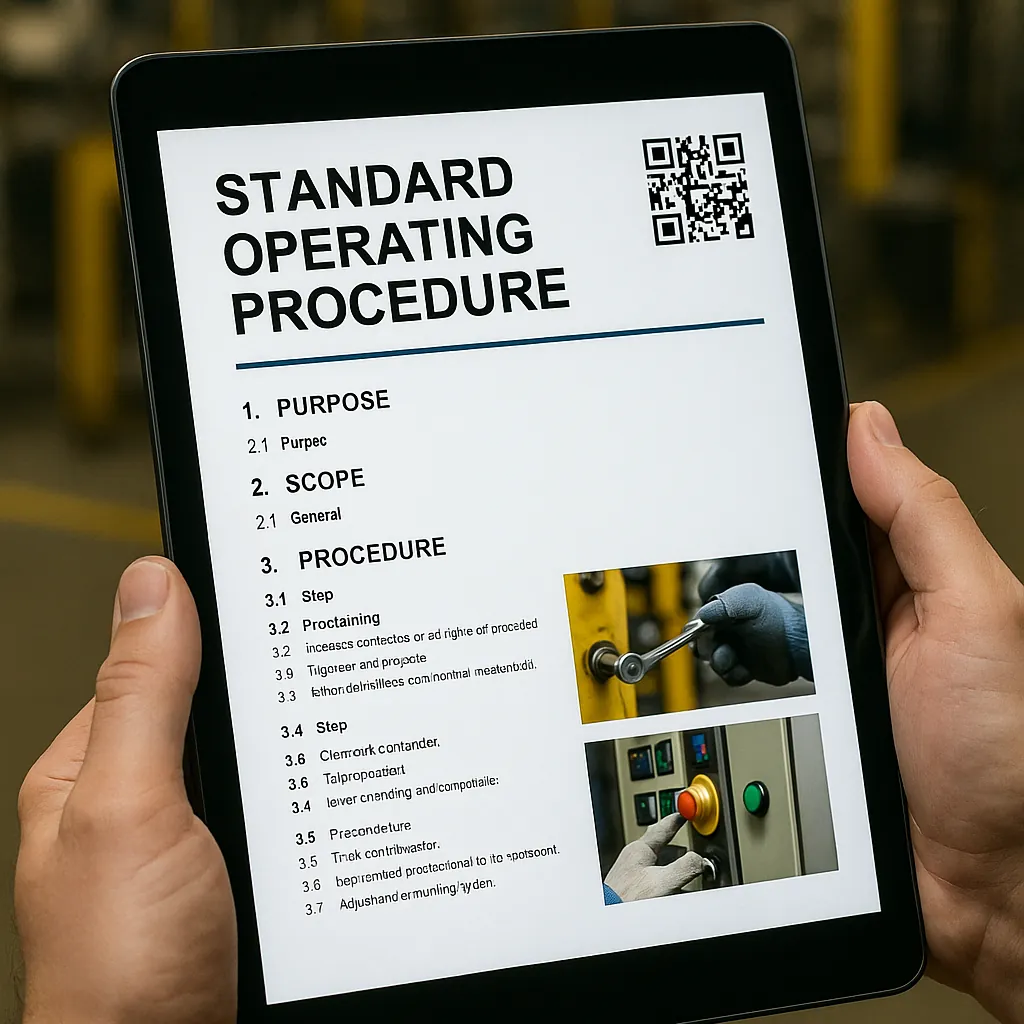
7 Practical Ways to Improve Your Standard Operating Procedures
Many SOPs exist on paper but are not followed. Seven practical ways to improve your Standard Operating Procedures on the shop floor, starting today.
Practical articles about writing, implementing and digitizing Standard Operating Procedures (SOPs) and work instructions, for quality, compliance and continuous improvement on the shop floor.
Many SOPs exist on paper but are not followed. Seven practical ways to improve your Standard Operating Procedures on the shop floor, starting today.

Improve production reliability and consistency with well-designed SOPs. Follow these 5 practical steps for the manufacturing shop floor.
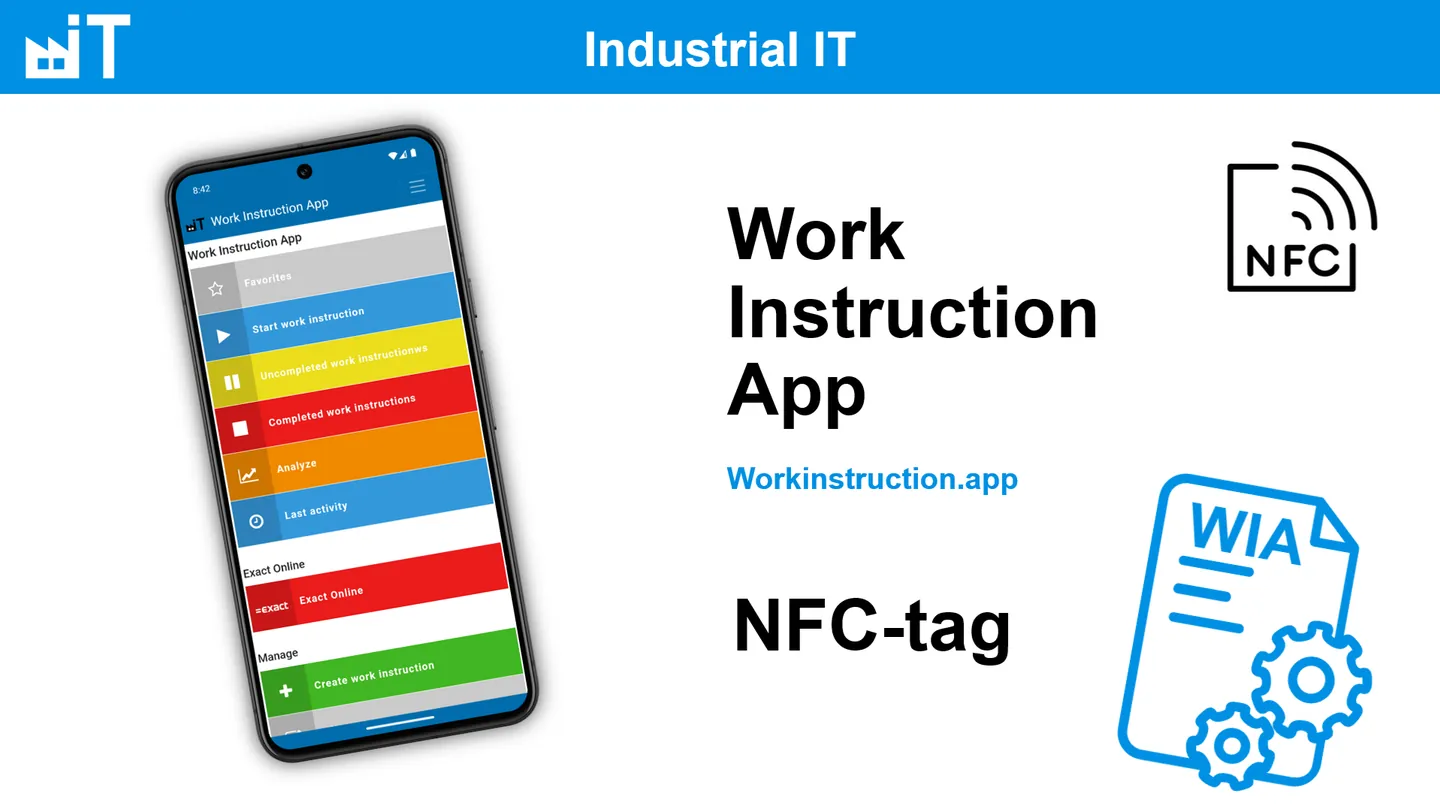
Use NFC tags on the shop floor and a digital logbook to make SOPs instantly available, log every action and integrate with Exact Online.
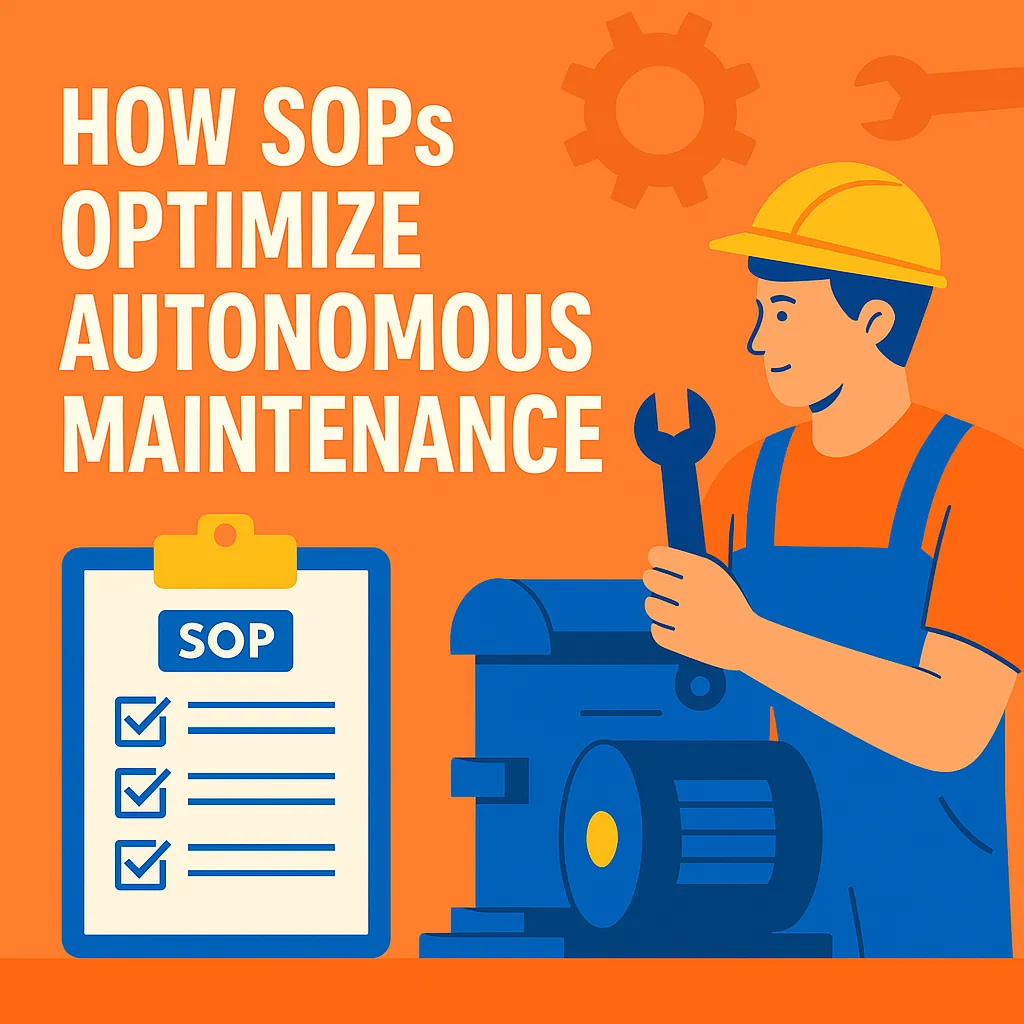
How SOPs optimize autonomous maintenance within TPM: standardized tasks, fewer errors and better training so operators can do basic maintenance themselves.

The ultimate guide to Standard Operating Procedures: what an SOP is, its benefits, and a step-by-step plan to write, implement and digitize effective SOPs.

Why do SOPs fail? The most common causes, from unclear and outdated procedures to poor training, and how to implement SOPs successfully.

How the Work Instruction App improves efficiency and compliance with SOPs: always up-to-date procedures, faster onboarding and better quality control.

Why SOPs are essential for quality and regulatory compliance: consistent processes, better training, lower risk and easier audits.

How a digital skills matrix strengthens your SOPs: link employee competencies to procedures for better compliance, training and workforce planning.

How digital work instructions boost team productivity: access anywhere, faster onboarding, fewer errors and continuous improvement.

Checklist: which elements should every Standard Operating Procedure (SOP) contain? From title, purpose and scope to roles, steps and revision history.

Implementing SOPs often goes wrong. Learn the 5 most common mistakes when introducing Standard Operating Procedures and how to avoid them.

Why Standard Operating Procedures (SOPs) are essential for businesses: consistency, quality, efficiency, faster onboarding and compliance.